What Is Microfinance?
Think about the last time that you took out a loan. Was it to get the car you have, put yourself through school, or maybe grow a business?
Imagine what you would have done without that loan. How would you get to work? Would you have been able to go to college? Would your business still be prospering? Now imagine a loan on a much smaller scale, no more than $150. To many Americans, this would be a trifling amount of money. However, to many people, this amount of money is enough for a life-changing investment.
"Microfinance provides the poor with access to basic financial services such as loans, savings, money transfer services, and micro-insurance."
—CGAP
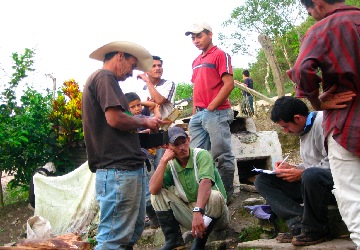
Access to financial services is a critical need of all people, but the millions of people worldwide who need it most are ignored and forgotten.
With few possessions valuable enough to be used as collateral and no formal credit history, most traditional banks view impoverished people as credit risks. People in rural areas face even larger difficulties accessing financial services because banks avoid their remote locations altogether. We aim to overcome these hurdles by providing microloans to one such poor, rural region in Honduras, known as La Unión. Microloans are used to invest in seeds, fertilizers, necessary tools, and other such equipment that improves agricultural production. Essentially, microfinance enables clients to make investments in their work which yield long-lasting benefits for them and their families. For example, with the improved economic capacity made possible by microfinance, clients can provide more nutritious food to their families, be ready for unforeseen health emergencies, or put their children through school. And these are only a few of the possibilities.